


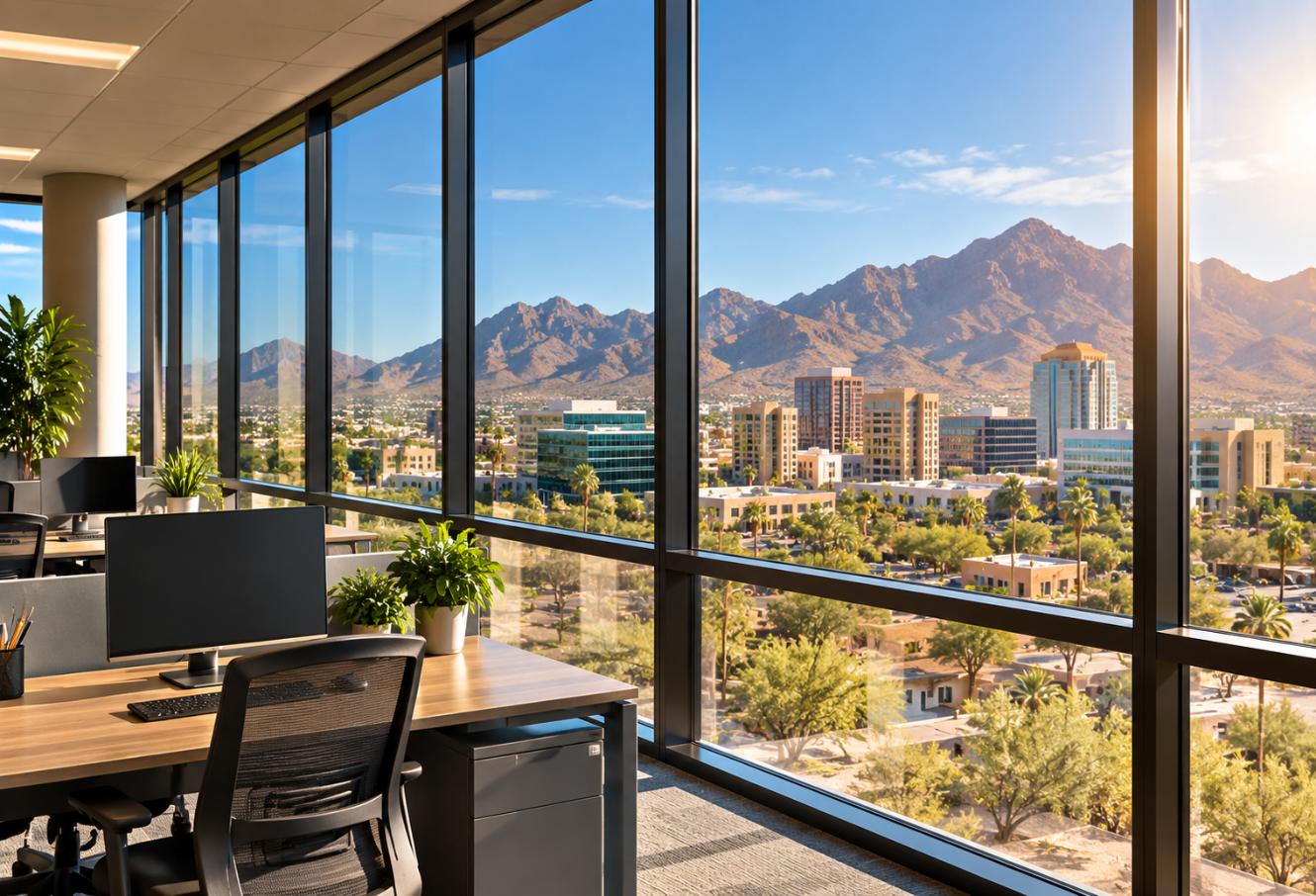
Office buildings in Tucson deal with intense sunlight, prolonged summer heat, glare on computer screens, and rooms that can feel noticeably warmer near exterior glass. Choosing the right commercial window film can help address those problems without requiring businesses to replace otherwise functional windows.
The best window film for most office buildings in Tucson is a high-quality solar control film selected for the building’s glass, orientation, appearance, and comfort goals. Spectrally selective films are often a strong option when businesses want to reduce solar heat and glare while preserving natural light. Reflective or darker films may make more sense where maximum heat and glare control are higher priorities.
What Tucson Office Managers Should Know
-
Solar control film can reduce the amount of solar heat entering through office windows, helping rooms near the glass feel more comfortable.
-
South- and west-facing windows in Southern Arizona often deserve special attention because of strong afternoon sun exposure.
-
Offices near Downtown Tucson, Broadway Boulevard, and major commercial corridors may prioritize glare control without sacrificing natural daylight.
-
The best film is not automatically the darkest film. Visible light, heat rejection, reflectivity, privacy, glass compatibility, and exterior appearance should all be considered.
-
Commercial window film should be matched to the existing glass system rather than selected only by color or appearance.
Why Does Window Film Matter for Tucson Office Buildings?
Window film matters for Tucson office buildings because abundant sunshine and a long hot season can turn exposed glass into a significant source of unwanted heat and glare. Offices with large windows may experience uneven temperatures, uncomfortable workstations, faded interior materials, and increased demand on the cooling system.
National Weather Service Tucson climate information describes the region as having a long, hot season with abundant sunshine. That combination makes solar exposure an everyday building-management consideration rather than an occasional summer problem.
Tucson Electric Power also advises businesses to shade sun-exposed windows and walls as one way to reduce heat gain. For buildings where exterior shade is impractical, professionally selected window film can provide another way to manage sunlight at the glass.
AGTP Window Films LLC helps local businesses evaluate window film based on the needs of their specific property. We look at factors such as sun exposure, glass type, interior use, desired appearance, and the problems occupants are experiencing before determining which type of film makes sense.
What Is the Best Type of Window Film for an Office?
The best office window film is usually a solar control film that balances heat reduction, glare control, natural light, and appearance. In many Tucson offices, spectrally selective film provides an appealing balance because it is designed to manage solar energy while allowing more visible daylight than heavily tinted alternatives.
Different office buildings may benefit from different options:
Spectrally selective film: A strong choice for professional offices where maintaining a bright, relatively natural appearance is important.
Reflective solar film: Useful when stronger solar control and daytime privacy are priorities and a more reflective exterior appearance is acceptable.
Neutral solar film: Suitable for offices that want solar performance with a less mirrored appearance.
Darker solar film: May help areas with severe glare, particularly rooms with extensive west-facing glass, but visible light levels need to be considered carefully.
There is no single film specification that is best for every commercial property. A medical office near Banner University Medical Center may have different daylight and privacy priorities than a storefront office near Speedway Boulevard or a corporate property along East Broadway.
What Local Conditions Affect Window Film Selection?
Tucson’s strong sun exposure, extended cooling season, building orientation, and large temperature differences between sunny and shaded spaces all affect window film selection. The direction each window faces can be just as important as the total amount of glass in the building.
West-facing glass is often one of the first areas to evaluate because late-day sunlight can create heat and glare when offices are still occupied. South-facing windows can also receive substantial solar exposure.
Buildings in Downtown Tucson may have different glass systems and architectural considerations than newer office properties around Oro Valley or the Catalina Foothills. Properties near Tucson International Airport, central business corridors, and suburban office parks can also vary widely in window size, glazing type, shading, and interior layout.
That is why film should be selected for the actual building instead of simply ordering a product based on a sample or darkness level.
What Are the Signs an Office Could Benefit From Solar Window Film?
An office may benefit from solar window film when sunlight is creating recurring comfort, glare, or interior-protection problems around exterior windows. Problems are often most noticeable at specific times of day, which can help identify which elevations should receive attention first.
Common warning signs include:
-
Employees regularly close blinds during working hours because of glare.
-
Computer screens are difficult to see near windows.
-
Workstations beside exterior glass feel considerably warmer than interior areas.
-
Certain conference rooms become uncomfortable in the afternoon.
-
Blinds remain closed even though the business would prefer natural daylight.
-
Furniture, flooring, artwork, or merchandise receives prolonged direct sunlight.
-
Staff frequently adjust thermostats because sunny and shaded areas feel different.
-
West-facing rooms become noticeably hotter late in the business day.
When Should You Call a Commercial Window Film Professional?
You should call a commercial window film professional when heat, glare, privacy, or sunlight problems are persistent enough to affect occupant comfort or building operations. Professional evaluation is particularly important before installing film on commercial glass because the film must be compatible with the glazing system.
Property managers can begin by noting which rooms become uncomfortable and at what times. Observe whether the problem comes primarily from glare, heat, direct sunlight, privacy concerns, or a combination of those factors.
DIY installation becomes less practical on large panes, elevated windows, extensive storefront systems, and commercial buildings where consistent appearance matters. Film selection also involves more than choosing a tint percentage, so identifying the existing glass should be part of the process.
What Causes Excessive Heat and Glare in Tucson Offices?
Excessive office heat and glare usually result from direct solar exposure, window orientation, large areas of unshaded glass, and interior layouts that place employees close to windows. Tucson’s sunny desert environment can make those conditions especially noticeable for commercial properties.
The most common contributors include:
-
West-facing windows: Afternoon sun can strike the glass while offices are still fully occupied.
-
Large glass walls: More exposed glass gives solar energy a larger path into the building.
-
Limited exterior shading: Some commercial buildings have little protection from surrounding trees, overhangs, or adjacent structures.
-
Workstations next to windows: Employees sitting close to the glass may experience discomfort before the rest of the room does.
-
Computer-intensive work: Even moderate sunlight can create distracting screen reflections.
-
Closed blinds as the primary solution: Blinds can help with visible light but may leave businesses sacrificing daylight and views throughout the day.
How Can Tucson Businesses Maintain Better Window Comfort?
Tucson businesses can maintain better window comfort by monitoring sun-exposed areas, keeping windows and seals in good condition, using interior shading appropriately, and addressing persistent solar heat and glare rather than repeatedly compensating at the thermostat.
Before Tucson’s hottest months, property managers can walk the building during the afternoon and identify unusually warm rooms or workstations with strong glare. Check damaged blinds, weather stripping, window seals, and other obvious issues that may also contribute to discomfort.
After film installation, normal glass cleaning should follow the film manufacturer’s care recommendations. Avoid assuming every window-cleaning method or abrasive tool is appropriate for filmed glass.
What Results Can Businesses Expect From Office Window Film?
Businesses can realistically expect properly selected office window film to improve solar comfort, reduce glare, and change how much sunlight passes through affected windows. The exact results depend on the film, glazing, window orientation, building design, and amount of direct sun exposure.
A room with severe west-facing exposure may show a more noticeable comfort improvement than a shaded north-facing room. Likewise, a high-performance solar film will not correct unrelated HVAC deficiencies, failed insulated glass, air leaks, or poorly balanced ductwork.
The goal should be solving the specific glass-related problem rather than expecting film to compensate for every building comfort issue.
What Mistakes Should Tucson Property Managers Avoid?
Tucson property managers should avoid choosing commercial film based only on darkness, price, or a small sample because those factors do not show how the product will perform across an entire office building.
Mistake: Choosing the darkest available film.
Consequence: The office may lose more daylight than necessary.
Better approach: Compare solar performance and visible light transmission together.
Mistake: Treating every elevation the same.
Consequence: Some windows may receive film they do not need while heavily exposed areas are not optimized.
Better approach: Evaluate the north, south, east, and west exposures separately.
Mistake: Ignoring glass compatibility.
Consequence: A film may not be appropriate for the existing glazing configuration.
Better approach: Identify the glass before selecting a product.
Mistake: Focusing only on summer.
Consequence: Businesses may overlook year-round glare, UV exposure, daylight, privacy, and appearance considerations.
Better approach: Select film around the building’s overall operational needs.
What Is a Common Tucson Office Window Film Scenario?
A common Tucson office scenario is a suite that remains comfortable in the morning but develops strong heat and glare along west-facing offices and conference rooms during the afternoon. Employees lower blinds, adjust thermostats, or move away from windows even though other areas of the building remain comfortable.
In that situation, the first step is determining whether the problem is primarily solar exposure or whether HVAC and building-envelope issues are also involved. If the windows are the main source, an appropriately selected solar control film may help reduce the problem while allowing the office to retain useful daylight.
What Window Film Solutions Are Available for Commercial Properties?
Commercial properties can use several categories of window film depending on whether their primary goal is solar control, glare reduction, daytime privacy, UV protection, or a combination of those needs. The appropriate solution should be selected according to the building rather than using one film specification everywhere.
Our commercial window film process can help identify which areas of an office have the greatest solar exposure and which performance characteristics should receive priority.
How Should Businesses Compare Their Window Film Options?
Businesses should compare window film options by looking at solar performance, visible light transmission, reflectivity, appearance, glare reduction, glass compatibility, and the intended use of each room. Cost matters, but the least expensive film is not necessarily the best fit for a heavily occupied commercial space.
For example, a reception area may need generous daylight and an attractive exterior appearance. A west-facing conference room may place greater emphasis on glare control. An executive office with expansive glass may require a balance among view preservation, comfort, and appearance.
Looking at those spaces separately produces a more useful plan than choosing one tint because it appears dark enough.
What Areas Can Commercial Window Film Serve Around Tucson?
Commercial window film can be useful for office properties throughout Tucson and surrounding Pima County communities where solar exposure creates heat and glare concerns. Buildings in Downtown Tucson, the Catalina Foothills, Oro Valley, and other nearby commercial areas can face different exposures and glazing conditions.
The building itself should ultimately determine the recommended film rather than its ZIP code alone.
What Can Happen If Excessive Solar Heat and Glare Are Ignored?
Ignoring excessive solar heat and glare can leave office occupants dealing with recurring discomfort, closed blinds, distracting screen reflections, and uneven conditions between perimeter and interior spaces. Over time, prolonged sunlight can also contribute to fading of furnishings and interior finishes.
For local property managers, the issue may also lead to repeated attempts to solve a window-related problem by changing thermostat settings. Evaluating the source of the discomfort can help determine whether window film, HVAC service, exterior shading, or another improvement is the appropriate response.
FAQ
What is the best window film for office buildings in Tucson?
The best window film for most Tucson offices is a solar control film matched to the building’s glass, orientation, daylight needs, and desired appearance. Spectrally selective films can be especially attractive when businesses want meaningful solar control without making offices unnecessarily dark, while reflective films may suit buildings needing stronger glare or daytime privacy performance.
Does window film help keep Tucson offices cooler?
Solar control window film can reduce solar heat entering through treated glass, which may improve comfort in sun-exposed areas of Tucson offices. Results vary by window orientation, film performance, glass type, exterior shading, and building conditions, so film should be viewed as one component of the building’s overall heat-management strategy.
Is window film helpful for west-facing offices in Tucson?
Yes, window film can be particularly useful on west-facing Tucson office windows because afternoon sunlight can create significant glare and heat while employees are still working. The appropriate film should balance solar control with the amount of natural light the business wants to preserve and the desired exterior appearance.
Will commercial window film make an office too dark?
Commercial window film does not necessarily make an office too dark because films are available with different visible light transmission levels. Tucson businesses that value bright interiors can consider products designed to provide solar control while retaining more daylight. Comparing samples and performance characteristics is preferable to simply choosing the darkest tint.
Can window film reduce computer screen glare?
Window film can reduce distracting sunlight and glare reaching computer screens when exterior glass is a major source of the problem. This can be useful in Tucson offices with workstations positioned near large east-, south-, or west-facing windows. The amount of glare reduction depends on the selected film and existing lighting conditions.
Does office window film protect furnishings from Tucson sunlight?
Window film can help reduce factors associated with fading, including ultraviolet exposure and portions of solar energy passing through the glass. It cannot completely eliminate fading because visible light, heat, material composition, and age also contribute. Businesses with sun-exposed flooring, furnishings, artwork, or merchandise can include fade reduction among their selection priorities.
Should every window in a Tucson office use the same film?
No, every window in a Tucson office does not necessarily require the same treatment because solar exposure can vary substantially by orientation and surrounding shade. A west-facing conference room may need different performance than a shaded north-facing office. Evaluating each elevation can lead to a more targeted commercial window film plan.
When is the best time to install commercial window film in Tucson?
Commercial window film can be considered throughout the year, but evaluating heat and glare before the hottest part of the Tucson cooling season can help businesses address known trouble areas proactively. Property managers should plan around building access, tenant schedules, and the scope of installation rather than waiting until uncomfortable conditions become severe.
Improve Comfort in Your Tucson Office
The right commercial window film should make sense for your building, your glass, and the way people actually use the space. We can help you evaluate solar exposure, glare, daylight, and appearance so you can choose an appropriate solution without relying on guesswork.